
Managing five vehicles is hard. Managing fifty or five hundred is a whole different job.
With a large fleet, small problems grow fast. One driver who idles too long wastes some fuel. A hundred drivers doing the same thing waste a lot of money. One missed oil change is a small risk. Dozens of missed services can lead to costly breakdowns.
This is where fleet management solutions come in. In this guide, we look at the biggest problems large fleets face and how large fleet tracking solutions help fix them.
What Are Fleet Management Solutions?
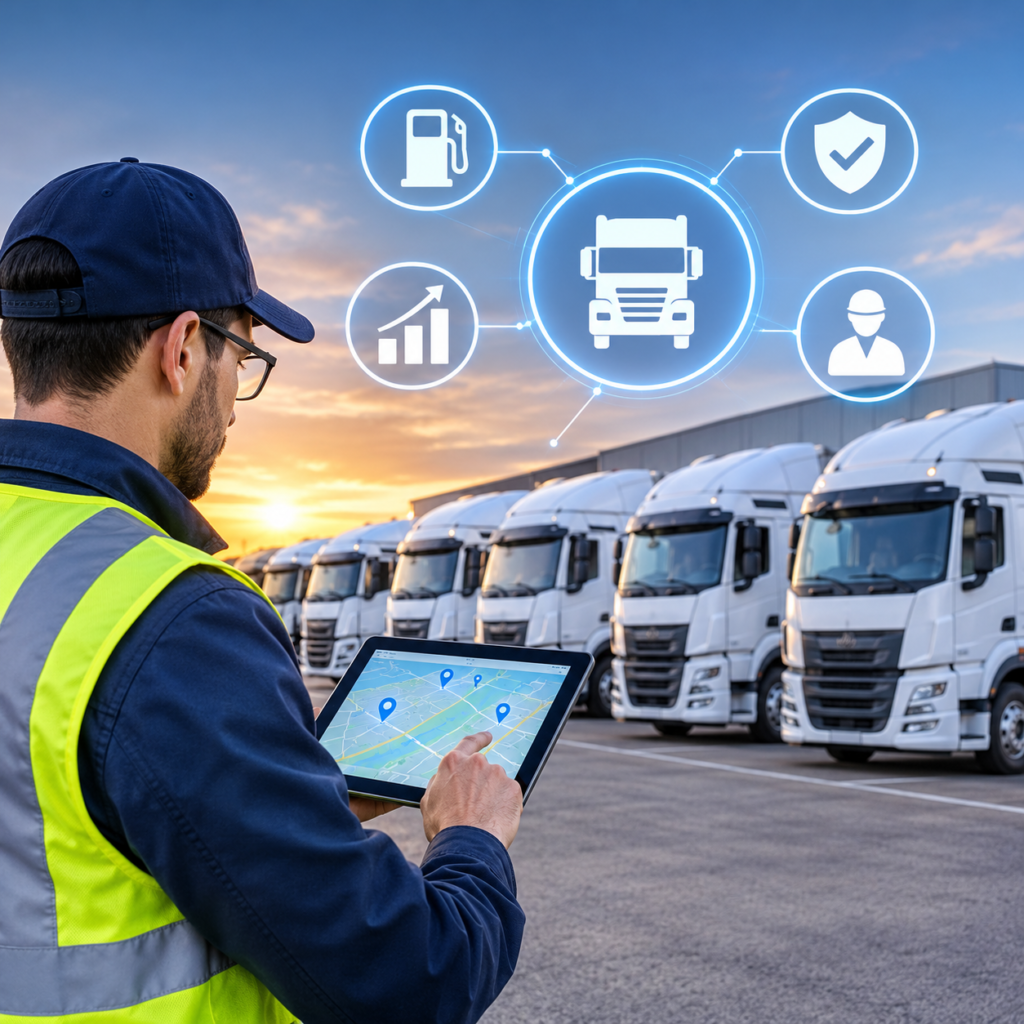
Fleet management solutions are tools that help you watch, control, and improve your vehicles and drivers. They usually include:
- GPS trackers in each vehicle
- Software or an app where you see all your vehicles
- Alerts and reports about trips, drivers, and vehicle health
For large fleets, the key is having all this data in one place. Managers can then spot problems and act quickly.
The 6 Biggest Problems in Large Fleets
1. High Fuel Costs
Fuel is often the largest running cost. Waste comes from idling, speeding, poor routes, and sometimes fuel theft.
2. Unsafe Driving
Harsh braking, fast turns, and speeding raise the risk of accidents. Accidents cost money, hurt people, and damage your brand.
3. Unplanned Downtime
When a truck breaks down, deliveries stop. Late service is one of the main causes.
4. Misuse of Vehicles
Some drivers use company vehicles for personal trips after hours. This adds fuel costs and wear.
5. Poor Visibility
Without tracking, managers depend on phone calls to know where vehicles are. This wastes time and causes errors.
6. Slow Response to Emergencies
If a driver is in danger or a truck is hijacked, every minute counts.
How Large Fleet Tracking Solutions Help
Driver Behavior Alerts
Good tracking systems watch how each vehicle is driven. They send alerts for:
- Harsh braking
- Harsh acceleration
- Sharp cornering
- Speeding
Managers can then coach drivers who need help. Over time, safer driving lowers fuel use, wear, and accident risk.
Zone Control (Geofencing)
You can draw zones on a map, like your depot, a client’s site, or a city boundary. The system alerts you when a vehicle enters or leaves a zone.
This helps you:
- Confirm arrival at delivery points
- Stop vehicles from going to places they should not go
- Spot after-hours use quickly
Ignition and Idle Monitoring
The system knows when the engine is on or off. You can see how long each vehicle sits with the engine running. Cutting idle time is one of the fastest ways to save fuel.
Speed Reports
Reports show which vehicles go over the speed limit and how often. This makes it easy to set clear rules and track progress.
Panic Button for Driver Safety
Some trackers include a panic switch. If a driver is in danger, they press it. The system sends an alert with the vehicle’s location right away.
Remote Engine Stop
Some devices can stop the engine from a distance in an emergency, such as theft. This must be used with care and only when it is safe.
Extra Sensors
Advanced trackers can connect to extra sensors. For example, some can read temperature for cold-chain trucks carrying food or medicine. Others can identify which driver is using the vehicle.
Key Numbers to Track
Large fleets should watch a few key numbers each month:
| What to Measure | Why It Matters |
| Idle time per vehicle | Shows fuel waste |
| Speeding events | Shows safety risks |
| Harsh driving events | Shows coaching needs |
| Distance driven | Helps plan service schedules |
| On-time arrivals | Shows customer service level |
| After-hours use | Shows possible misuse |
Start with three or four of these. Add more as your team gets used to the data.
How to Roll Out Tracking Across a Large Fleet
Step 1: Start With a Pilot
Do not install trackers on every vehicle at once. Start with a small group, such as 10 to 20 vehicles. Learn what works.
Step 2: Talk to Your Drivers
Drivers may worry that tracking means they are not trusted. Explain that the goal is safety and fair performance. Share how alerts can protect them, such as the panic button.
Step 3: Set Clear Rules
Write down speed limits, idle limits, and zone rules. Make sure every driver knows them.
Step 4: Train Your Managers
Managers need to know how to read reports and act on alerts. Plan short training sessions.
Step 5: Scale Up
Once the pilot works, roll out to the rest of the fleet in phases.
Step 6: Review Every Month
Look at your key numbers. Praise drivers who improve. Coach those who need help.
Tramigo Fleet Solutions for Large Fleets
Tramigo offers fleet management solutions built for businesses of all sizes, including large fleets in tough settings like mining. Its devices support features such as:
- Driver behavior alerts for harsh braking, acceleration, and cornering
- Zone control and speed reporting
- Ignition monitoring
- An emergency panic switch
- Real-time push notifications through the Tramigo app
The T24 Fleet supports 12V to 24V vehicles and includes an immobilizer for emergencies. The T25 Fleet adds Bluetooth to link with extra sensors. The Tramigo app also offers trip history, custom alerts, and zone drawing, all from your phone.
Final Thoughts
Large fleets have large challenges, but also large chances to save. The right fleet management solutions show you what is really happening on the road. With clear data, you can cut fuel waste, prevent breakdowns, protect drivers, and serve customers better. Start small, involve your drivers, track a few key numbers, and grow from there.