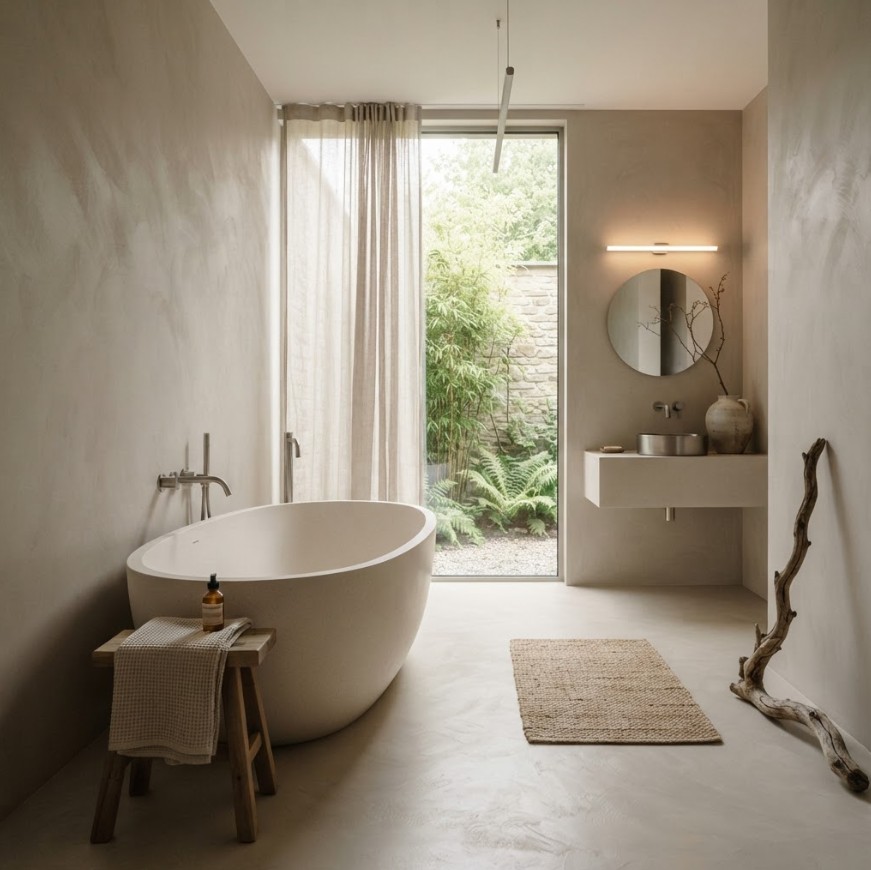

An outdated bathroom does not always need a complete visual overhaul to feel contemporary. Changing the surface finish can make a surprisingly significant difference. A microcement bathroom creates a smooth, continuous appearance that can bring walls, floors and selected surfaces together in a more refined design.
What Makes Microcement Different?
Microcement is a versatile surface finish designed to create seamless, modern surfaces. Unlike conventional tiled finishes, its continuous appearance avoids visible grout lines and joints, giving the bathroom a cleaner and more minimalist character.
This makes it particularly interesting for older bathrooms where dated tiles, busy patterns or visually fragmented surfaces make the room feel less cohesive.
How Can Microcement Modernise an Old Bathroom?
Create a More Seamless Look
One of the most noticeable changes comes from reducing visual interruptions. Microcement can be used across walls and floors to establish greater continuity between different areas of the bathroom.
Instead of several tile patterns competing for attention, the surface becomes part of one coordinated design.
Refresh Dated Surfaces
Old bathrooms often have finishes that reflect a particular design period. Replacing the visual character of these surfaces with a refined microcement finish can give the room a distinctly contemporary appearance.
The result can feel simpler without making the space look plain.
Introduce Texture and Colour
A modern bathroom does not have to rely entirely on white or glossy surfaces. Microcement allows design decisions around colour and texture, helping homeowners create an interior that feels more individual.
For example, a soft neutral finish can support a calm bathroom, while a deeper tone can create a stronger visual statement.
Where Can Microcement Be Used?
A microcement bathroom can incorporate the finish across several surfaces, depending on the design and project requirements. Potential applications include:
- Bathroom walls
- Bathroom floors
- Selected furniture surfaces
- Areas where a continuous decorative finish is preferred
Using the same finish across multiple surfaces can help create a more unified interior.
Is Microcement Suitable for Every Bathroom?
Choosing microcement should begin with the existing condition of the bathroom and the desired result. The surface, layout, colour and texture all influence how the finished space will look.
It is also worth considering whether you want a subtle refresh or a stronger transformation. Looking at samples before deciding on a colour or texture can make the selection process easier.
Why Consider Microcement for a Bathroom Update?
For homeowners looking beyond conventional bathroom finishes, microcement offers a different design direction. Its seamless appearance can simplify the visual composition of a room, while its range of colour and texture options allows greater creative flexibility.
Rather than making the bathroom feel newly decorated, the goal can be to make it feel intentional, cohesive and contemporary.
Final Thoughts
Updating an old bathroom is often about more than replacing individual fixtures. The surfaces surrounding them play an equally important role. A microcement bathroom can create a continuous, modern appearance across walls, floors and selected surfaces, helping an older interior take on a cleaner and more refined identity.
FAQs
1. Can microcement be used on bathroom walls?
Yes. Microcement can be used as a decorative surface finish for walls, creating a continuous appearance without the visual interruption of conventional grout lines and tile joints.
2. Can microcement be used on bathroom floors?
Microcement is suitable for creating modern floor surfaces as part of a considered bathroom design. The existing surface and project requirements should be assessed before installation.
3. Does a microcement bathroom have to look minimalist?
Not necessarily. While its seamless appearance naturally complements minimalist interiors, colour and texture choices can help create warmer, more expressive or distinctive bathroom designs.
4. Can microcement be used on bathroom furniture?
Yes. Microcement can be applied to furniture as well as walls and floors. This can help coordinate different elements and create a more visually connected bathroom interior.
5. How do I choose the right microcement colour for my bathroom?
Consider the bathroom’s natural light, existing fixtures and overall design direction. Reviewing colour and texture samples is useful before selecting the finish for the final project.