
You walk into a tint shop. The staff shows you a board full of glass samples. One says 70%. Another says 35%. One more says 5%. Which one should you pick?
Many car owners feel lost at this point. They just point at the one that “looks nice.” Later, they find it is too dark at night or too light to stop the heat.
This guide explains car tint in the Philippines in plain words. You will learn what the numbers mean, which shade fits each window, and how to stay safe and legal on the road.
What Does VLT Mean?
VLT stands for Visible Light Transmission. It is the amount of light that passes through the glass and film.
- A high VLT, like 70%, means more light comes in. The glass looks light.
- A low VLT, like 5%, means very little light comes in. The glass looks very dark.
Here is the key point. VLT is only about light. It does not tell you how much heat the film blocks. A light film can block more heat than a dark one if it uses better technology.
So when you shop, ask for two numbers. Ask for the VLT for the look. Then ask for the heat rejection for the comfort.
Common Tint Shades and What They Feel Like
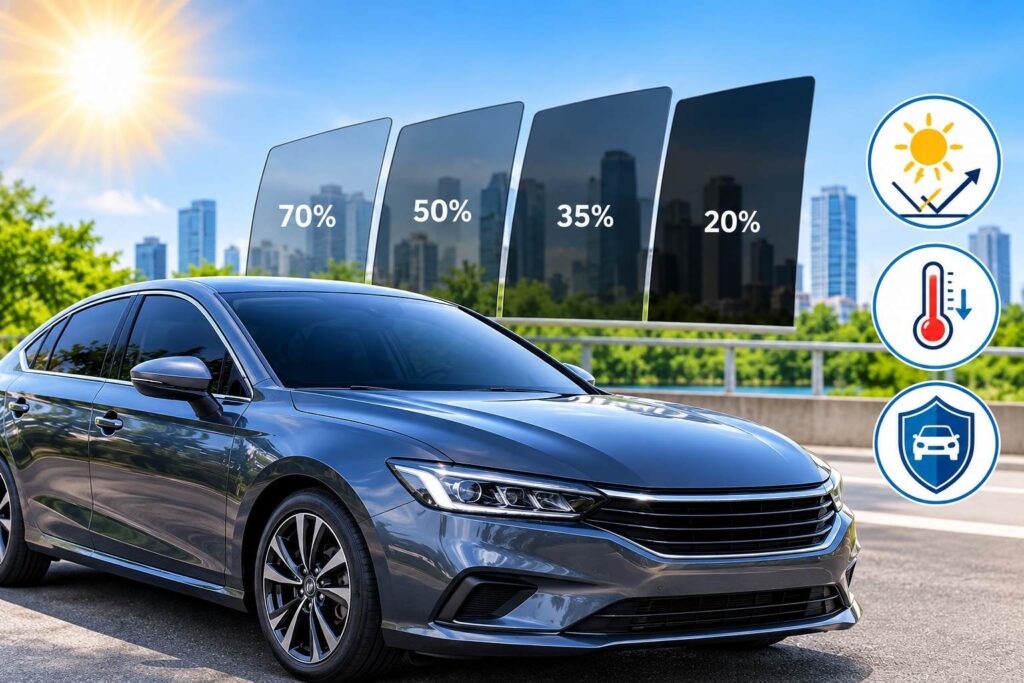
| VLT | How It Looks | Best For |
| 70% to 80% | Almost clear | Windshield, drivers who want a factory look |
| 50% | Light smoke | Front side windows, good night view |
| 35% | Medium dark | Daily driving, a balance of privacy and view |
| 20% | Dark | Rear windows, more privacy |
| 5% | Very dark | Rear glass only, for privacy |
Which Shade Goes on Which Window?
Your car has different kinds of glass. Each one has a different job. So it makes sense to use different shades.
The Windshield
The windshield is your main view of the road. It needs to stay bright and clear. Most drivers choose a light film here, often 70% or higher. A clear heat-blocking film is a smart choice. It cuts heat on your face and hands without making the road hard to see.
The Front Side Windows
These windows help you check side mirrors and see motorcycles near you. A medium shade works well. Many drivers go for 35% to 50%.
The Rear Side Windows and Back Glass
Passengers sit here, and bags are often left here. You can go darker for privacy and to keep things out of sight. Still, remember that the back glass helps you see when you reverse.
Stay Safe When Driving at Night
Dark tint looks cool in the day. At night, it can be a problem. Rainy nights make it even harder to see.
Keep these tips in mind:
- Do not go too dark on the windshield and front windows.
- Test the view at night before you choose. Ask the shop if you can see a sample in low light.
- Keep your glass clean inside and out. Dirt plus dark tint makes it harder to see.
- If you often drive on dark provincial roads, pick a lighter shade in front.
Rules and RFID: What to Know
Car tint in the Philippines is allowed. But the driver must still have a clear view of the road. The Land Transportation Office (LTO) sets the rules. Rules can change, so it is best to check the latest LTO guidance before you tint.
There is one more thing many people forget. Toll roads use RFID stickers, often placed on the windshield or headlamp. Some metal-based films can block the scanner signal. Ask your shop to pick a film that does not get in the way of RFID, GPS, or your phone.
Car Tint for Drivers in Parañaque and the South
If you live in Parañaque, you know the roads well. You may use the Skyway, NAIA Expressway, or Coastal Road every day. These roads are wide and open, with little shade. Your car takes direct sun for a long time.
For these trips, a good heat-blocking film on the windshield is a big help. Many drivers looking for car tint in Parañaque make the short trip to L.A. Car Accessories and Tint Room in Makati. It is easy to reach from the south, and their team can help you pick the right VLT for each window.
Mistakes to Avoid With Car Tint in the Philippines
Here are some common mistakes we see:
- Choosing only by color. A dark film is not always a cool film.
- Using the same shade on every window. Each window has a different job.
- Forgetting night driving. Test before you decide.
- Ignoring signals. Metal films may block toll and phone signals.
- Picking the lowest price. Cheap film may fade, bubble, or peel soon.
Quick Checklist Before You Book
- I know the VLT I want for each window.
- I asked for the heat rejection number, not just the shade.
- I checked that the film will not block RFID or GPS.
- I checked the latest LTO rules.
- I know what the warranty covers.
Final Thoughts
Car tint in the Philippines is about more than looks. The right VLT keeps your view safe. The right film keeps the heat out. When you understand the numbers, you can choose with confidence. Take your time, ask questions, and match each window to its job. Your eyes, your passengers, and your aircon will all thank you.